NetSys 2025
International Conference on Networked Systems 2025
01-04 September 2025 – Ilmenau, Germany
NetSys 2025 Keynotes
Keynote 1: “When something looks too good to be true, it usually is! AI is causing a credibility crisis in networking”
Speaker: Walter Willinger, NIKSUN, Inc.
Date and Time: Tuesday, September 2, 2025, 9.15-10.15 AM
This talk is sounding the alarm about a deeply concerning but much-overlooked development in the use of Artificial Intelligence (AI) and Machine Learning (ML) for solving problems in science in general and in particular in networking. Simply put, in today’s age of AI/ML, the much-publicized and well-documented “reproducibility crisis” in science is further compounded by an inconspicuous and rarely mentioned “credibility crisis.” More to the point, focusing on the area of networking research, I will provide evidence that among the already small number of reproducible publications that describe AI/ML-based solutions to specific networking problems, even fewer, and often none, describe trained AI/ML models that are “credible” in the sense that they can be trusted to not only perform well in their original training domain but also in new and untested environments. I will elaborate on the root cause of this credibility crisis, argue why the credibility of AI/ML models is key to their successful use in practice, and put forward a radical proposal for addressing this crisis head-on so as to pave the way for a future where the field of networking can reap the full benefits of AI/ML.
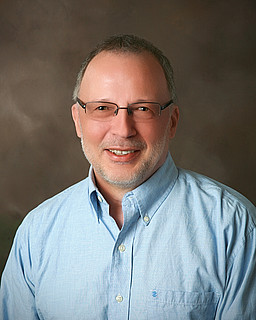
Biography: Walter Willinger is Chief Scientist at NIKSUN, Inc., a Princeton-based cybersecurity company. Before joining NIKSUN, he worked at AT&T Labs-Research in Florham Park, NJ from 1996 to 2013 and at Bellcore Applied Research from 1986 to 1996. Dr. Willinger received his Dipl. Math. degree from the ETH Zurich and his M.S. and Ph.D. degrees in Operations Research and Industrial Engineering from Cornell University. He is a Fellow of ACM (2005), IEEE (2005), AT&T (2007), SIAM (2009), and AAIA (2023); co-recipient of the 1995 IEEE Communications Society W.R. Bennett Prize Paper Award and the 1996 IEEE W.R.G. Baker Prize Award; co-recipient of the 2005 and 2016 ACM/SIGCOMM Test-of-Time Paper Awards; co-recipient of the IRTF Applied Networking Research Prize (2023); and recipient of the 2024 IEEE Internet Award. His paper “On the self-similar nature of Ethernet traffic” was featured in the 2007 IEEE ComSoc publication “The Best of the Best — Fifty Years of Communications and Networking Research”, as one of the most influential papers in communications and networking in the last half century.
Keynote 2: “Securing Digital Sovereignty in Large-Scale IT Infrastructures”
Speaker: Prof. Dr.-Ing. Günter Schäfer, Technische Universität Ilmenau
Date and Time: Wednesday, September 3, 2025, 9.15-10.15 AM
"Digital First. Doubts Second." may have served as a catchy slogan in in a recent national election campaign, but from an IT security perspective it is certainly a bad approach for the digital transformation of economic and government organizations. Successful digitalization requires information not only to be readily available when needed, but also to be effectively protected from unauthorized access and manipulation. Maintaining the availabilty, integrity and efficient operation of large-scale communication and IT infrastructures has emerged as a major challenge in today's information technology landscape which is dominated by developments like outsourcing information processing to cloud computing and demand for ever higher communication and processing speeds. This talk will present various approaches to configuration and operation of large scale virtual private network (VPN) infrastructures, efficient software-based implementation of VPN data plane processing, strong tenant separation in cloud computing infrastructures, as well as maintaining communication security in VPNs in the presence of attackers with quantum computers, which over the past 18 years have been developed at the Telematics/Computer Networks research group at Technische Universität Ilmenau. Some of these approaches have already found their way into the product line of a leading German cybersecurity company, been certified by the German Federal Office for Information Security (BSI) for protecting processing of classified information, and in some instances been rolled-out to protect large-scale network infrastructures run by German authorities.
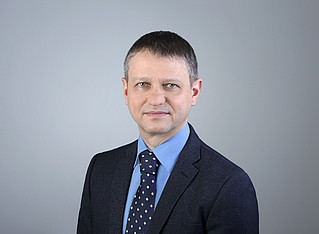
Biography: Günter Schäfer is a full Professor of Computer Science at Technische Universität Ilmenau, Germany. Before joining TU Ilmenau in 2005, he worked at Technische Universität Berlin, Germany from 2000 to 2005, at École Nationale Supérieure des Télécommunications Paris (now Télécom Paris), France from 1999 to 2000, and at Universität Karlsruhe (now Karlsruhe Institute of Technology, KIT), Germany from 1994 to 1999. He holds a Diploma (comparable to M.Sc.) degree in Computer Science and a Dr.-Ing. (comparable to Ph.D.) degree in Computer Science, both from Universität Karlsruhe. He is a recipient of the German IT Security Prize (3rd place, 2010, together with Dr.-Ing. Michael Rossberg). Since 2014 he also serves as a member of the supervisory board of secunet Security Networks AG, Germany's leading cybersecurity company, and since 2023 he furthermore serves on the board of the German National Research and Education Network (DFN) Association.